Asphalt pavement requires regular attention to withstand vehicle traffic, water, sunlight, snowplows, road salt, and Michigan’s repeated freeze-thaw cycles. Small cracks and drainage issues can develop into potholes, unstable pavement, and more expensive repairs when they are left untreated.
This guide explains how to maintain asphalt driveways, parking lots, private roads, and commercial pavement. It also helps homeowners and property managers determine when preventive maintenance is appropriate and when repair, resurfacing, or replacement may be necessary.
Key Takeaways
- Inspect asphalt at least twice each year and after severe weather.
- Address open cracks before water reaches the pavement base.
- Correct drainage problems instead of repeatedly repairing the resulting damage.
- Sealcoating protects structurally sound pavement but does not repair potholes or base failure.
- Commercial parking lots may require phased work to preserve property access.
- Maintenance decisions should be based on pavement condition, traffic, drainage, and repair history.
- Documenting pavement conditions helps property managers plan budgets and avoid emergency work.
What Is Asphalt Maintenance?
Asphalt maintenance includes preventive treatments, localized repairs, inspections, cleaning, drainage corrections, and surface protection intended to slow pavement deterioration.
A complete maintenance plan may include:
- Routine pavement inspections
- Crack sealing
- Pothole and localized asphalt repair
- Drainage improvements
- Sealcoating
- Parking lot striping
- Catch basin and pavement-edge inspections
- Resurfacing when surface deterioration becomes widespread
- Full replacement when the pavement structure or base has failed
The correct treatment depends on the cause and extent of the damage. Applying a surface coating over structural pavement failure may temporarily improve appearance, but it will not correct the underlying problem.
Why Is Asphalt Maintenance Important in Michigan?
Michigan pavement experiences conditions that can accelerate deterioration.
Water can enter open cracks and reach the aggregate base beneath the asphalt. When temperatures fall, trapped moisture may freeze and expand. Repeated freezing and thawing can widen cracks, weaken pavement edges, and contribute to settlement or potholes.
Asphalt surfaces are also affected by:
- Snowplows and winter maintenance equipment
- Road salt and deicing materials
- Heavy vehicle traffic
- Delivery trucks and turning movements
- Oil and automotive fluids
- Poor surface drainage
- Standing water
- Sunlight and oxidation
- Tree roots and vegetation
- Weak or poorly compacted base material
Routine inspections allow these concerns to be identified while repairs may still be limited to smaller areas.
- Spring
After winter freeze-thaw cycles and snowplow activity.
- Fall
Before freezing temperatures return.
- After events
Heavy rain or flooding, utility work, construction, severe winters, drainage changes, heavy truck traffic or snow-removal damage.
How Often Should Asphalt Be Inspected?
Homeowners and property managers should inspect asphalt at least twice each year:
- In spring, after winter freeze-thaw cycles and snowplow activity
- In fall, before freezing temperatures return
Additional inspections may be needed after:
- Heavy rain or flooding
- Utility work
- Construction activity
- Unusually severe winters
- Drainage changes
- Heavy truck traffic
- Snow-removal damage
- Complaints about potholes or uneven pavement
Commercial properties with high traffic, loading areas, private roads, or several parking lots may benefit from more frequent inspections and documented condition reports.
What Should You Look for During an Asphalt Inspection?
Walk the entire paved area and document visible changes. Photos, dates, and notes can help track how quickly individual problems are progressing.
Look for:
- Open or widening cracks
- Interconnected alligator cracking
- Potholes
- Loose or crumbling asphalt
- Sunken or uneven areas
- Rutting in traffic lanes
- Standing water after rain
- Blocked drainage structures
- Broken pavement edges
- Failed patches
- Oil or chemical stains
- Faded parking lot markings
- Damaged curbs or catch basins
- Vegetation growing through cracks
- Changes around utility cuts
Property managers should also record how pavement damage affects entrances, accessible parking spaces, sidewalks, loading areas, fire lanes, traffic routes, and tenant access.
What Is a Practical Asphalt Maintenance Schedule?
There is no single maintenance schedule that fits every property. Pavement age, drainage, construction quality, traffic, previous repairs, and Michigan weather all affect what is needed.
Monthly or During Routine Property Inspections
- Remove accumulated debris.
- Check catch basins and drainage paths.
- Note new potholes, settlement, or trip hazards.
- Monitor loading areas and high-traffic zones.
- Look for oil or chemical spills.
- Confirm that traffic markings remain visible.
Every Spring
- Inspect for new winter damage.
- Identify cracks that opened or widened.
- Check areas affected by snowplows.
- Look for standing water and drainage changes.
- Review patches completed during previous seasons.
- Prioritize safety-related repairs.
Every Fall
- Seal suitable cracks before winter.
- Complete necessary patching while weather permits.
- Clear drainage structures.
- Repair vulnerable pavement edges.
- Review the property’s snow-storage and plowing plan.
- Identify work that should be budgeted for the following year.
Every Two to Three Years
Have the pavement evaluated to determine whether sealcoating or another preventive treatment is appropriate. The decision should be based on surface condition rather than an automatic calendar schedule.
Busy commercial parking lots and loading areas may wear faster than residential driveways or low-traffic pavement.
What Are the Main Types of Asphalt Maintenance?
Crack Sealing
Crack sealing limits the amount of water and debris entering appropriate pavement cracks. It is most effective when completed before cracking spreads or develops into larger failed areas.
Crack sealing does not rebuild pavement with widespread interconnected cracking or an unstable base. Learn more about professional asphalt crack sealing.
Asphalt Patching and Repair
Localized patching may be appropriate for potholes, isolated failed areas, damaged edges, and certain utility cuts. The failed material must be removed or prepared correctly so the repair addresses the cause of the damage.
Repeated failure in the same location may indicate drainage, base, or traffic problems that require a broader solution.
Anthony’s Asphalt provides asphalt repair for residential and commercial pavement.
Sealcoating
Sealcoating applies a protective surface layer to structurally sound asphalt. It can reduce exposure to moisture, sunlight, oxidation, salt, oil, and normal surface wear while restoring a darker, more uniform appearance.
Before sealcoating, the pavement must be cleaned and suitable cracks or damaged areas should be repaired. Sealcoat cannot correct potholes, settlement, alligator cracking, or base failure.
Visit the asphalt sealcoating service page for professional service information.
Parking Lot Striping
Clear markings support traffic flow, space organization, accessible parking, loading zones, fire lanes, and pedestrian movement. Restriping is often completed after sealcoating or resurfacing, once the pavement is ready.
Learn more about parking lot striping.
Asphalt Resurfacing
Resurfacing installs a new asphalt layer over a properly prepared existing pavement structure. It may be appropriate when surface damage is extensive but the underlying base remains suitable.
Failed areas, drainage concerns, transitions, and pavement elevations must be evaluated before an overlay is recommended. Learn more about asphalt resurfacing.
Full-Depth Replacement
Replacement may be necessary when deterioration extends through the pavement structure or the base can no longer support the expected traffic.
The project may involve:
- Removing failed pavement
- Correcting unsuitable base material
- Improving grading and drainage
- Recompacting the base
- Installing new asphalt
- Restoring pavement markings
How Do You Know Which Asphalt Service Is Needed?
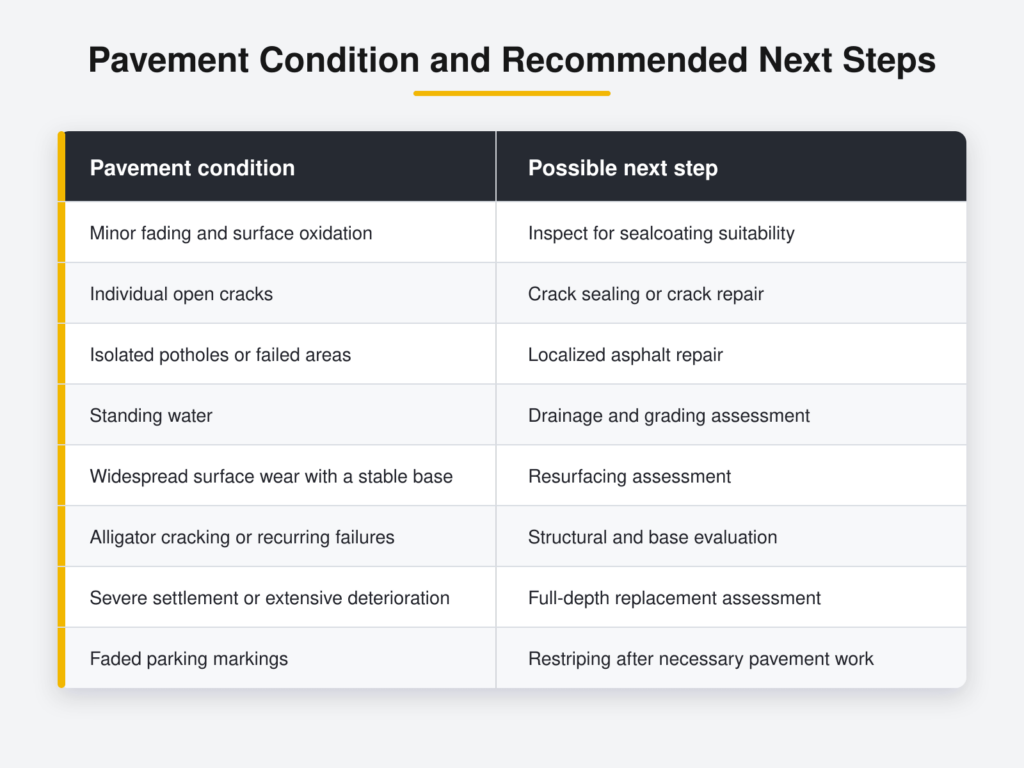
This table provides general guidance. An on-site inspection is needed before selecting a repair method.
When Is Sealcoating Appropriate?
Sealcoating may be appropriate when asphalt:
- Is structurally sound
- Has minor surface oxidation
- Is beginning to lose its dark appearance
- Has repairable cracks
- Does not have widespread base failure
- Can remain closed during application and curing
- Has been properly cleaned and prepared
Sealcoating is not the right treatment for pavement with:
- Recurring potholes
- Extensive alligator cracking
- Soft or unstable areas
- Severe rutting
- Significant settlement
- Standing water
- Widespread crumbling
- Failed base material
These conditions should be evaluated for repair, resurfacing, drainage correction, or replacement.
Asphalt Maintenance for Commercial Properties
Commercial asphalt maintenance requires more than treating visible damage. Property managers must also consider safety, tenant access, customer traffic, deliveries, emergency routes, parking demand, and operating hours.
A commercial maintenance plan should account for:
- High-traffic entrances and exits
- Truck routes and loading areas
- Accessible parking and access aisles
- Fire lanes
- Pedestrian crossings
- Drainage structures
- Snow-storage areas
- Waste collection routes
- Construction and delivery schedules
- Tenant or customer notification
- Phased closures
- Long-term repair budgets
Anthony’s Asphalt provides commercial asphalt paving, parking lot paving, and parking lot repair throughout Southeast Michigan.
How Property Managers Can Plan an Asphalt Maintenance Budget
Start by dividing pavement needs into three categories.
Immediate Safety and Access Needs
These may include:
- Significant potholes
- Abrupt pavement transitions
- Damaged accessible parking areas
- Blocked drainage
- Severe settlement
- Failed areas near entrances
- Problems affecting emergency access
Preventive Maintenance
This may include:
- Crack sealing
- Localized patching
- Sealcoating
- Drainage cleaning
- Restriping
- Pavement-edge repair
Long-Term Capital Work
This may include:
- Large-area resurfacing
- Full-depth reconstruction
- Major drainage corrections
- Private road replacement
- Parking lot redesign
- Multi-phase paving
A written condition assessment can help property managers compare priorities, plan phased work, and explain upcoming capital needs to owners, boards, or tenants.
Common Asphalt Maintenance Mistakes
Waiting Until Potholes Appear
Potholes often develop after water and traffic have already affected the pavement. Earlier crack and drainage repairs may reduce the extent of future damage.
Sealcoating Over Structural Failure
Sealcoating cannot stabilize a failed base or rebuild deteriorated asphalt. Existing damage must be assessed first.
Ignoring Drainage Problems
Repeatedly patching an area without correcting standing water or poor drainage may lead to recurring failure.
Applying Too Many Surface Coatings
Sealcoating should be based on pavement condition. Applying it too frequently may create unnecessary buildup.
Selecting a Contractor Based Only on Price
Estimates should be compared based on preparation, repair depth, materials, drainage, asphalt thickness, compaction, traffic control, cleanup, and payment terms.
Failing to Document Repairs
Property managers should keep records of inspections, repairs, warranties, invoices, photos, and maintenance dates. This information supports future budgeting and contractor evaluations.
Questions to Ask an Asphalt Contractor
Before approving pavement work, ask:
- What is causing the visible damage?
- Is the problem limited to the surface or does it involve the base?
- What preparation is included?
- How will drainage concerns be addressed?
- Which areas will be repaired, resurfaced, or replaced?
- What asphalt thickness and compaction process are proposed?
- How will entrances and traffic routes remain accessible?
- Can the project be completed in phases?
- When can vehicles safely return?
- What maintenance will be needed afterward?
- What could cause the price or scope to change?
- Can you provide examples of similar projects?
A clear proposal should explain the recommended work, paved areas, preparation, materials, schedule, access plan, payment terms, and cleanup responsibilities.
Protect Your Asphalt Investment
Effective asphalt maintenance begins with regular inspections and early attention to cracks, drainage, and localized failures. The right plan can help property owners manage pavement costs, reduce emergency repairs, and determine when preventive maintenance is no longer enough.
Anthony’s Asphalt evaluates pavement condition, drainage, base stability, traffic demands, and long-term property needs before recommending a solution. Services are available for homeowners, commercial properties, HOAs, apartment communities, schools, churches, industrial facilities, and managed properties throughout Southeast Michigan.
Contact Anthony’s Asphalt to schedule an on-site pavement assessment and receive a written estimate based on the condition and use of your property.
Frequently Asked Questions
How often should asphalt be inspected?
Inspect asphalt at least twice per year, preferably after winter and before freezing temperatures return. High-traffic commercial properties may require more frequent inspections.
How long does asphalt pavement last in Michigan?
There is no guaranteed lifespan. Pavement performance depends on base preparation, drainage, asphalt thickness, compaction, traffic, weather, snow removal, and ongoing maintenance.
What is the most important asphalt maintenance task?
Keeping water from entering and weakening the pavement structure is a major priority. This may involve timely crack sealing, drainage correction, patching, and maintenance of pavement edges.
Does sealcoating repair damaged asphalt?
No. Sealcoating protects a structurally sound surface but does not repair potholes, settlement, alligator cracking, drainage problems, or base failure.
Can asphalt be repaired during winter?
Temporary repairs may sometimes be used when an immediate hazard must be addressed. Permanent repair options depend on pavement condition, weather, materials, and the required installation method.
How much does asphalt maintenance cost?
Cost depends on pavement size, condition, preparation, repair depth, drainage, materials, access, traffic control, phasing, striping, and mobilization. An on-site assessment is needed for an accurate estimate.
When should asphalt be resurfaced instead of repaired?
Resurfacing may be appropriate when deterioration affects a large portion of the surface but the underlying pavement structure remains suitable. Widespread structural or base failure may require full-depth replacement.
Conclusion
Regular inspections and timely attention to cracks, drainage problems, potholes, and worn surfaces can help prevent minor pavement issues from becoming larger repairs. The right solution depends on the pavement’s condition, traffic demands, drainage, and previous maintenance history.
Anthony’s Asphalt provides professional asphalt maintenance, repair, sealcoating, resurfacing, and paving for commercial and residential properties throughout Southeast Michigan. Contact our team to schedule a pavement assessment and receive a clear recommendation based on your property’s needs.
Get a fast, accurate asphalt maintenance quote
Anthony’s Asphalt keeps Michigan driveways in top condition with routine inspections, crack sealing, sealcoating, and resurfacing when needed. Our maintenance approach resists freeze-thaw damage, improves curb appeal, and cuts down on costly repairs so your driveway looks great and lasts longer.
Work with a trusted Michigan paving contractor today. Serving Brighton, Howell, Novi, Livingston County, and surrounding communities.